
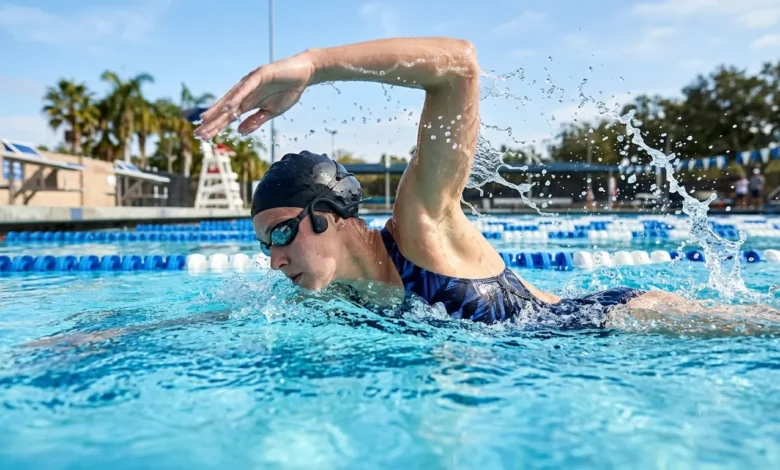
Most people buy swimming headphones expecting them to work like their everyday earbuds, then get frustrated in the first week. Bluetooth signals barely travel through water, regular waterproof ratings often mean splash-resistant rather than submersible, and standard earbuds tend to work loose the moment you push off the wall. Swimming headphones solve a different problem than typical wireless earbuds, and understanding that difference before you buy will save you from returning a pair that sounded great in the store and failed in the pool.
This guide covers how swimming headphones actually work, which features matter most, how to maintain them long-term, and how to avoid the mistakes that lead most first-time buyers back to the return counter.
How Swimming Headphones Actually Work
Swimming headphones fall into two main categories, and the difference determines almost everything about how they perform in the water.
Bone Conduction Technology
Bone conduction headphones rest on your temples instead of sitting inside your ear canal. Instead of pushing sound waves through air, small transducers vibrate against your cheekbones, and those vibrations travel through bone directly to your inner ear. Your ear canal stays open, which means you can still hear splashing, pool whistles, or someone calling your name from the pool deck. This makes bone conduction the safer choice for open water swimming, where situational awareness matters far more than it does in a quiet lap pool.
Waterproof In-Ear Headphones
The second category looks and functions like standard earbuds, but with waterproof housings and tighter, often finned ear tips designed to stay seated during flip turns. Sound quality and bass response tend to be stronger than bone conduction, since sound travels through air directly into the ear canal rather than through bone. The tradeoff is that your ears stay sealed, so you lose the ambient awareness that open water swimmers often want.
Which Type Should You Choose
If you swim mostly in a controlled pool environment and care more about audio quality than ambient sound, waterproof in-ear models are usually the better fit. If you swim in open water, train for triathlons, or simply want to hear a coach’s whistle without pulling a headphone out mid-lap, bone conduction is the safer default. Some swimmers actually own both, using in-ear models for solo pool sessions and bone conduction for group swims or open water where awareness matters more.
Bluetooth Doesn’t Work Underwater, Here’s Why
This is the detail most first-time buyers miss. Bluetooth relies on radio waves, and water absorbs radio waves almost immediately once your head goes under the surface. A pair that streams flawlessly from your phone on the pool deck will cut out the moment you start swimming laps.
The workaround built into nearly every serious pair of swimming headphones is onboard storage, usually somewhere between 4GB and 32GB. You load MP3 files directly onto the headphones before you swim, and they play from that internal memory instead of streaming. Bluetooth still works for calls, podcasts, and music once you’re back on dry land, but plan on transferring files manually for anything you want to hear underwater. If you rely entirely on a streaming service like Spotify, this is worth knowing before you buy, since you will need to download compatible files rather than stream your usual playlists.
Waterproof Ratings: What the Numbers Actually Mean
Not every waterproof headphone is built for submersion, and the rating system is where a lot of buyers get misled. An IPX rating measures resistance to water ingress, and the second digit is what matters for swimming. IPX4 or IPX5 means splash and sweat resistance, fine for running in the rain but not for laps. You want IPX7 or IPX8, which indicates the headphones can survive continuous submersion, usually rated to a specific depth such as one or two meters for a set number of hours.
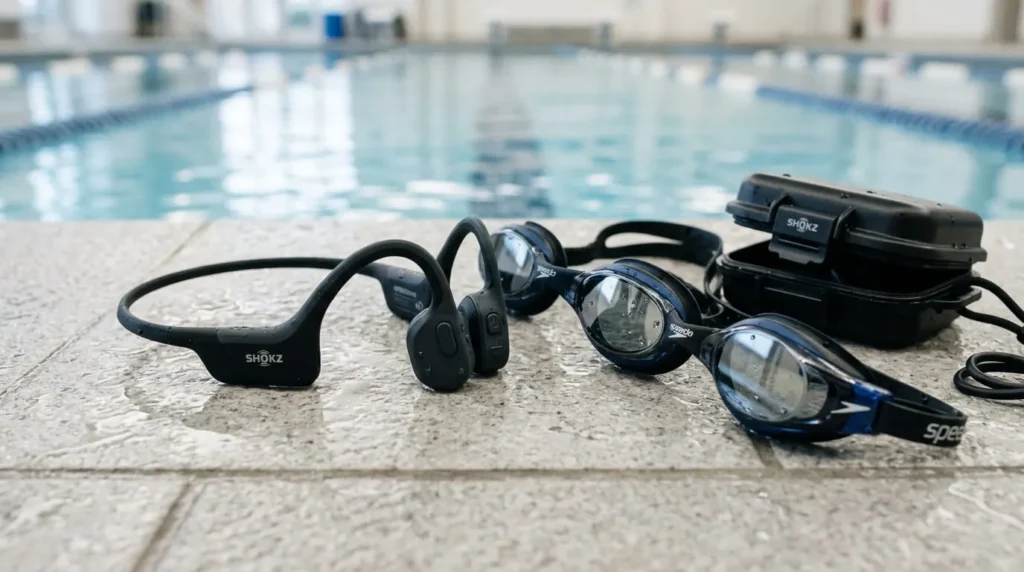
Some brands also list an ATM rating, borrowed from watch waterproofing standards, where 1 ATM roughly equals 10 meters of static water pressure. Swimming involves movement and pressure changes that static ratings don’t fully capture, so a pair explicitly marketed for swimming and tested by swimmers is a safer bet than one that simply lists a high ATM number without swim-specific testing. When a listing doesn’t mention swimming or lap testing at all, treat that as a warning sign rather than an oversight.
Key Features to Look for When Buying Swimming Headphones
Fit Under a Swim Cap
If you wear a cap, look for a low-profile band that sits flush against your head. Bulky over-ear designs can create pressure points once a tight cap goes on top, especially during longer sessions. Try to test the fit with a cap on before committing, since comfort in the store rarely predicts comfort after forty-five minutes of laps. Swimmers with smaller head sizes should also check whether the band offers any adjustment, since a loose fit is the single biggest reason headphones slip during flip turns.
Battery Life and Charging
Most swimming headphones run between six and ten hours per charge, which covers several weeks of typical training. Pay closer attention to the charging mechanism than the battery number itself. Magnetic charging ports are convenient but wear out faster with repeated water exposure, while covered charging ports are more durable but easier to forget to seal properly.
Sound Quality Underwater
Bone conduction sound thins out underwater since some vibration escapes before reaching your inner ear, so expect noticeably less bass than you’d get on land. Waterproof in-ear models generally hold their sound quality better underwater because they rely on sealed air conduction rather than bone. Neither type will match the clarity of your everyday earbuds worn on dry land, so it helps to set expectations before your first swim rather than assuming a hardware defect.
Storage Capacity
If you swim to full albums or long playlists, prioritize higher storage capacity over other features. A 4GB model might only hold an hour or two of music, while 16GB or higher gives you enough room for a full training week without needing to swap files constantly.
Pool Swimming vs Open Water: Different Priorities
Pool swimmers can generally prioritize sound quality and comfort, since the environment is controlled and predictable. Open water swimmers should weigh safety features more heavily, favoring bone conduction models that leave the ear canal open so you can hear boats, other swimmers, and safety personnel. Some open water swimmers skip headphones entirely for long swims and save them for shorter, supervised sessions where staying aware of surroundings matters less. Group workouts and masters swim classes are another case where open-ear designs make more sense, since you still need to hear instructions from a coach on deck.
Common Problems and How to Avoid Them
The most frequent complaint is headphones that shift or loosen during flip turns, usually solved by choosing a snugger fit size rather than the default. Water trapped near the charging port is another common issue, since it can prevent a full charge until it dries out completely, so always shake out the port and let it air dry before charging. Skipped or stuttering audio during MP3 playback is almost always a corrupted or incompatible file format rather than a hardware fault, so re-encoding tracks to a standard MP3 bitrate usually resolves it.
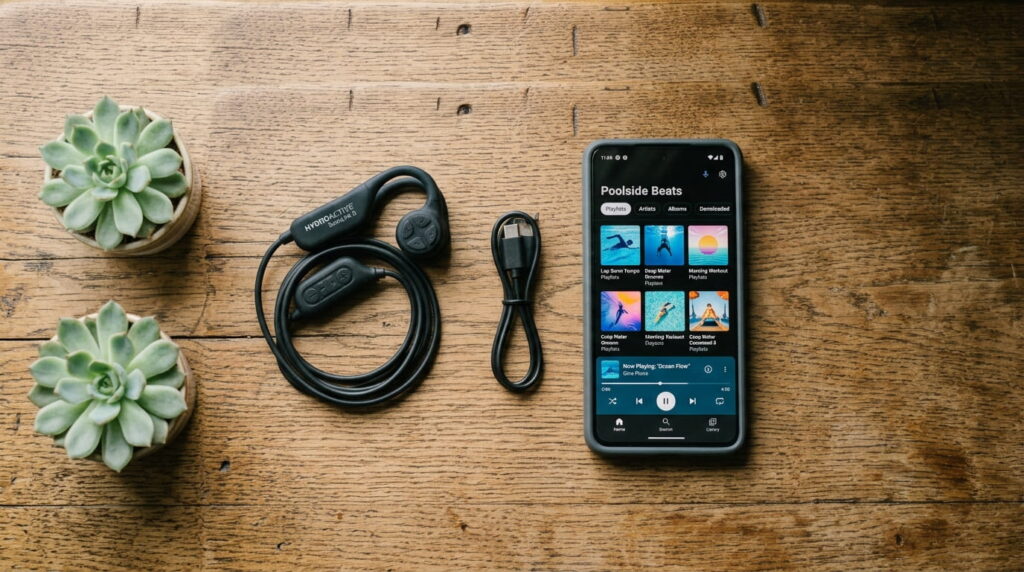
Another overlooked issue is muffled sound that develops gradually over weeks of use. This is usually caused by chlorine or salt buildup around the speaker vents rather than a failing driver, and a gentle rinse under fresh water after each swim prevents most of it.
Caring for Swimming Headphones Long Term
Chlorine and salt are the two biggest threats to long-term durability, and both are easy to manage with a short routine. Rinse the headphones under fresh, running water immediately after every swim, paying particular attention to the charging port and any seams where the housing meets the speaker unit. Let them air dry completely before placing them in a charging case, since sealing in trapped moisture is one of the fastest ways to damage internal components.
Avoid leaving swimming headphones in direct sunlight or a hot car, since extended heat exposure can degrade both the battery and the waterproof seals over time. If you swim daily, inspect the ear tips or speaker pads every few weeks for cracking or wear, since a failing seal is often the real cause behind a sudden drop in waterproof performance rather than a full hardware failure.
How Much Should You Spend
Entry-level swimming headphones typically start around 40 to 60 dollars and cover the basics: MP3 storage, a usable waterproof rating, and acceptable sound. Mid-range options between 80 and 130 dollars usually add better battery life, sturdier housings, and improved bass response. Premium models above 150 dollars tend to add features like fitness tracking integration, higher storage, and refined sound tuning, worthwhile mainly for swimmers training frequently enough to notice the difference.
For casual swimmers who use headphones a few times a month, an entry-level pair is usually enough. Competitive swimmers and triathletes training daily tend to see more value from the durability and battery improvements found in mid-range and premium models.