
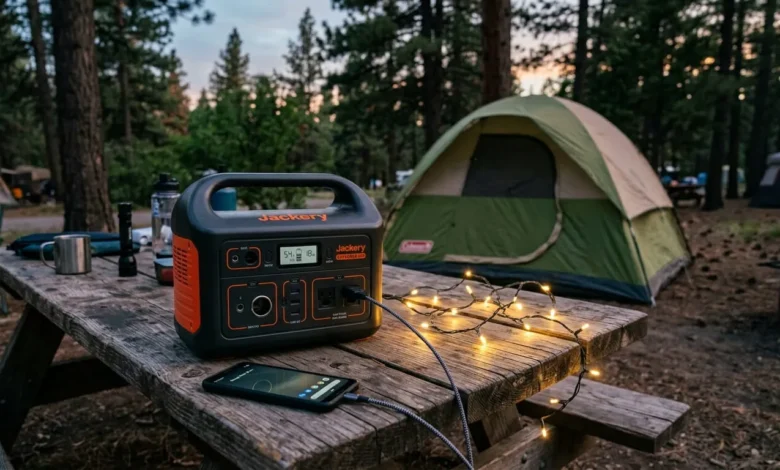
There is no single best portable power station, because the right one depends on whether you need to keep a phone charged at a campsite or run a refrigerator through a multi-day outage. This roundup of the best portable power stations sorts real, currently sold models by use case, drawing on lab testing from outlets like OutdoorGearLab, The Inertia, and GearJunkie, so you can match capacity and output to what you actually plan to run instead of guessing.
Prices and specific models shift often in this category, with new versions replacing old ones every year or two, so treat the numbers below as a snapshot rather than a permanent ranking, and check current listings before buying.
How to Size a Portable Power Station to Your Needs
Two numbers matter more than brand names. Capacity, measured in watt-hours (Wh), tells you how much energy the unit stores. Output, measured in watts (W), tells you how much it can deliver at once, with a separate surge rating for the brief spike that motors and compressors need to start.
A simple way to size one: list the wattage of what you plan to run, multiply by how many hours you will run it, and keep your total estimated use under about 80 percent of the unit’s rated capacity. A laptop pulling 65W for four hours uses roughly 260Wh, while a small fridge cycling on and off for a day can use several hundred more. Add those figures up before you shop, rather than after, since it is the difference between a unit that gets you through the night and one that dies at 2 a.m.
Continuous output and surge output are not the same number, and mixing them up is a common buying mistake. Continuous watts is what a unit can sustain for as long as needed; surge watts is a short burst, usually a second or two, that covers the moment a compressor or motor first kicks on. A power station rated for 1,000W continuous but only 1,500W surge will shut off the instant you try to start a device that needs a 2,000W surge to get going, even if its running wattage is much lower.
Weight and recharge time matter just as much once you are past the spec sheet. A 1,000Wh-class unit that weighs 20 pounds is easy to move between the car and a tent; a 3,000Wh home backup unit closer to 60 or 90 pounds is not something you carry upstairs on a whim.
Best Overall for Most People
The Anker C1000 Gen 2 came out on top in OutdoorGearLab’s 2026 head-to-head test of fourteen power stations from Jackery, Anker, EcoFlow, and Goal Zero. It lands in the roughly 1,000Wh capacity class that testers keep pointing to as the sweet spot for blackouts, off-grid camping trips, and everyday use away from a wall outlet, without the bulk of the larger home backup units.
For most people who want one power station that covers a weekend camping trip and a home blackout without overspending, this is the class to shop in, and the C1000 Gen 2 is the specific model testers rated highest overall.
Best Value
The Bluetti AC70 was The Inertia’s pick for best value in its 2026 testing, and the spec sheet explains why. It packs 768Wh of capacity into a 22.5-pound case with a 1,000W continuous output and a 2,000W surge rating, enough to run a mini fridge, a laptop, and a string of lights at the same time. Testers noted a clear display and fast charging as standouts, with the main tradeoff being a fan that runs louder than some competitors.
This capacity class, roughly 700 to 800Wh, tends to be the value sweet spot across most brands right now, since it covers a genuine overnight camping trip or a short home outage without paying for capacity most buyers will not use. Camping trips are only one use case; larger batteries can also serve as portable power stations for home during short outages
Best Compact Pick for Light Trips
If you only need to keep phones, headlamps, and a camera battery charged, a full-size power station is more than you need. Compact units in the 200 to 300Wh range, such as the EcoFlow River 3, typically sell for around $200 to $250 and weigh close to 7 or 8 pounds, small enough to fit in a daypack.
Best for Home Backup
For whole-home style backup rather than a single room, the Anker SOLIX F3800 stood out in both OutdoorGearLab’s and The Inertia’s 2026 testing. It is expandable up to 53.8kWh with add-on batteries, enough to cover multiple days of outage power, and its dual 120V/240V outlet configuration with a NEMA 14-50 port means it can run larger appliances like an electric range or a clothes dryer, not just small electronics.
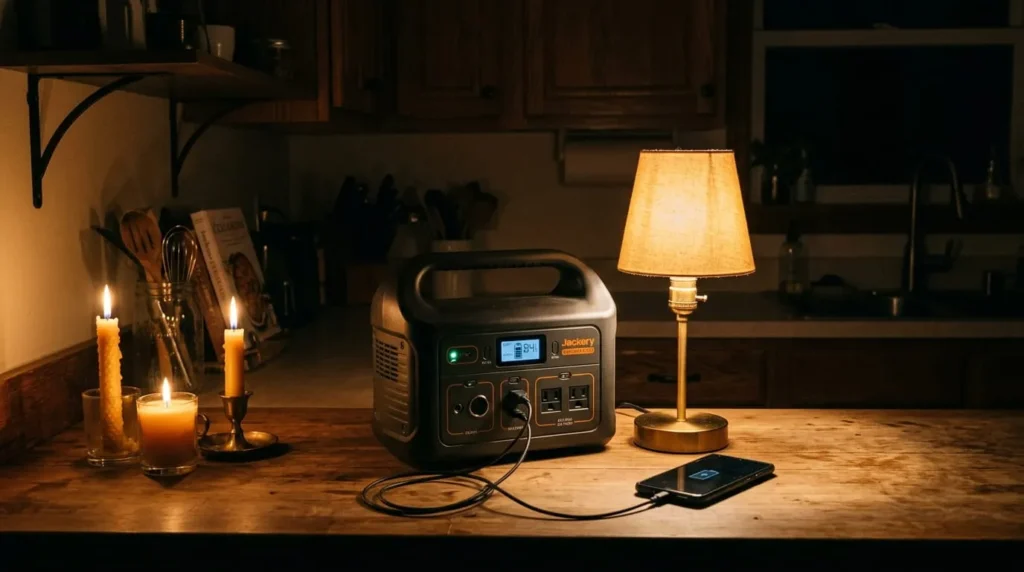
Units in this class are a serious investment and are heavy enough that most owners install them near an outlet permanently rather than moving them around, so they suit a fixed backup role better than a trunk-and-tailgate one.
Best for Van Life and RV Trips
Van and RV use puts different demands on a power station: steady output for a cooktop or small air conditioner, fast recharging while driving, and a design that can handle being bounced around daily. GearJunkie named the Anker Solix F2000 its pick for van life and overlanding, citing its ability to run multiple high-draw appliances at once along with a collapsible handle and built-in wheels that make it easier to move than most units in its output class.
Practical Motorhome’s testing of the Jackery Explorer 1000 V2 is worth a look too. It delivers 1,500W of continuous output with a 3,000W surge rating, recharges from 0 to 80 percent in about 45 minutes on AC power, and is rated for roughly 4,000 charge cycles, with expansion batteries available if 1,000Wh stops being enough.
Recharge Speed: AC, Solar, and Car Charging
Most modern power stations can refill three ways: a standard wall outlet, a car’s 12V outlet, or solar panels. Wall charging is by far the fastest, with several current models able to reach 80 percent in under an hour, which matters if you are hopping between campsites or trying to top up during a short break in a storm.
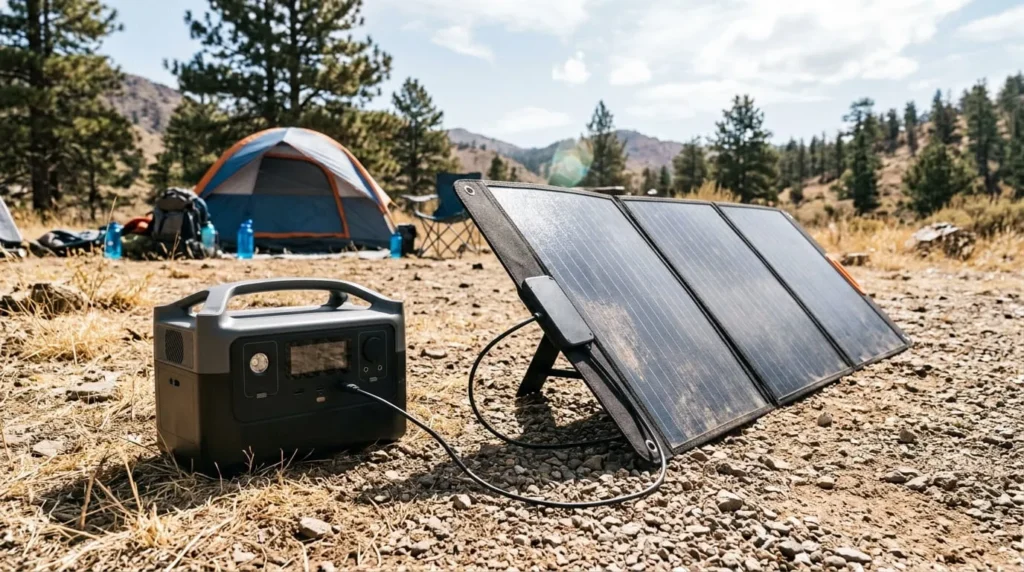
Car charging works fine as a backup but is noticeably slower and adds load to a vehicle’s electrical system over a long drive, so it suits topping off rather than a full recharge. Solar input is the slowest of the three in most real conditions, since output depends on panel size, angle, and how much sun you actually get that day, but it is the only option that works during an extended outage with no grid power and no vehicle to spare. If solar charging matters to your plans, check a unit’s rated maximum solar input in watts before buying, since a power station with a small solar input port will bottleneck even a large, expensive panel
Port Selection: What You Will Actually Plug In
Spec sheets like to lead with total Wh and W, but day to day, ports decide whether a power station actually fits your life. Standard three-prong AC outlets cover most household electronics and small appliances, while a fast USB-C port with power delivery support can charge a laptop directly without needing the AC inverter at all, which saves a meaningful amount of energy over a long trip.
A 12V DC car-style port is worth checking for if you run cooler boxes, tire inflators, or other 12V camping gear, and a pass-through charging feature, which lets the unit charge devices while it is itself being recharged, is a small detail that matters more than it sounds like once you are relying on one outlet for everything.
Battery Chemistry, Warranty, and Safety Basics
Nearly every power station worth buying today uses lithium iron phosphate (LiFePO4) cells rather than older lithium-ion chemistry. LiFePO4 batteries run cooler, tolerate more charge cycles before capacity drops off, with ratings commonly falling somewhere between 2,500 and 6,000 cycles depending on the model, and most manufacturers back that up with warranties in the two to five year range.
Unlike a gas generator, a power station produces no exhaust, so it is safe to run inside a tent, van, or house, though the unit itself still gives off some heat and works best with a bit of airflow around it. Keep any power station out of direct sun and extreme cold when possible, since both heat and freezing temperatures reduce a lithium battery’s effective capacity and lifespan over time.
Matching the category to your actual use case, rather than chasing the biggest number on the box, is what separates a good purchase from an expensive one that never leaves the garage. A camper who only needs to charge a phone and run a lantern gains nothing from a 3,000Wh unit built for home backup, and a homeowner facing multi-day outages will be underserved by a compact model built for backpacking. Whichever pick fits your situation, the best portable power stations on this list all share the same core traits worth insisting on: LiFePO4 cells, a clear watt-hour rating, and output that matches what you actually plan to run.