
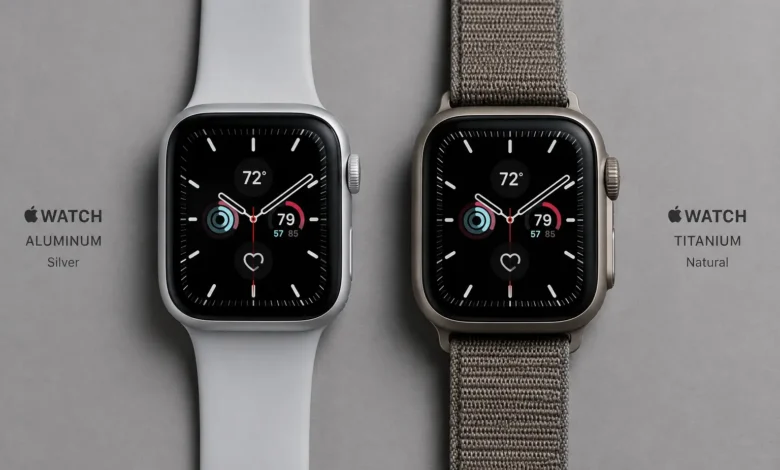
Picking between an aluminum and titanium Apple Watch feels like a simple upgrade decision until you actually stand in front of the options. Both versions run the same software, track the same workouts, and connect to the same apps. What changes is how the watch feels on your wrist, how it holds up over years of daily wear, and how much you pay for that difference.
This guide breaks down every meaningful distinction between the aluminum and titanium Apple Watch lineup, so you can decide which case material actually fits your budget, activity level, and style.
Aluminum vs Titanium Apple Watch: The Quick Answer
If you want the short version: aluminum is the lighter, more affordable, everyday choice, while titanium is the more durable, premium option built for people who want their watch to look new for years. Aluminum models typically start around $399, while titanium models start closer to $699.
Neither material changes the watch’s core performance. The health sensors, chip, battery life, and app experience are identical across both versions. The difference is entirely about the case, the display glass, weight, and finish.
Weight and Comfort on the Wrist
Weight is usually the first thing people notice when comparing the two. Aluminum is the lightest case material Apple offers. A 46mm aluminum model typically weighs around 37 grams, while the same size in titanium comes in closer to 43 grams. That six-gram gap does not sound like much on paper, but it becomes noticeable during long runs, overnight sleep tracking, or all-day wear.
If you sleep with your Apple Watch to track sleep stages, or you train for hours at a time, aluminum’s lighter feel tends to be more comfortable. Titanium still sits comfortably on the wrist, but it has more presence. Many users describe it as feeling more substantial rather than heavy, which is part of why it reads as a more premium product. Whichever case you choose, knowing how to change an Apple Watch band makes it easier to switch between different straps
Display Glass and Scratch Resistance
This is where the two materials genuinely diverge in day-to-day durability.
Aluminum Apple Watch models use Ion-X strengthened glass. It resists everyday knocks reasonably well, but it is more prone to fine scratches, especially if you wear the watch during yard work, gym sessions with weights, or rougher outdoor activities. Some owners notice small surface marks within the first few weeks of ownership.
Titanium models pair the case with sapphire crystal front glass. Sapphire is one of the hardest transparent materials used in consumer electronics, and it is dramatically more scratch-resistant than Ion-X glass. Owners frequently report titanium Apple Watches still looking close to new after years of daily use, even without a screen protector.

If scratch resistance and long-term appearance matter more to you than saving weight or money, titanium’s sapphire crystal is the bigger practical advantage over aluminum’s lighter build.
Durability Beyond the Screen
Scratch resistance is only part of the durability picture. The case material itself matters for dents, drops, and long-term wear.
Titanium is a harder metal than aluminum and resists denting better when the watch takes a hard knock against a doorframe, gym equipment, or a hard surface. Instead of showing sharp scratches, titanium tends to develop a soft, even patina over time that many owners find blends in rather than standing out.
Aluminum can dent more easily under a hard impact, and scuffs on the case edges are more visible against its matte or glossy colored finishes. For most casual users, this is not a dealbreaker, since aluminum is still built to Apple’s standard durability testing. But if you work in a physically demanding job, do frequent outdoor training, or are simply hard on your gadgets, titanium’s case holds up better over a multi-year ownership period.
Price Comparison
Price is often the deciding factor, and the gap between the two lines is real.
Aluminum Apple Watch models start at roughly $399 for GPS-only and around $499 with cellular. Titanium models start at about $699, and that price already includes cellular connectivity, so the effective premium over a cellular aluminum model is closer to $200 rather than $300.
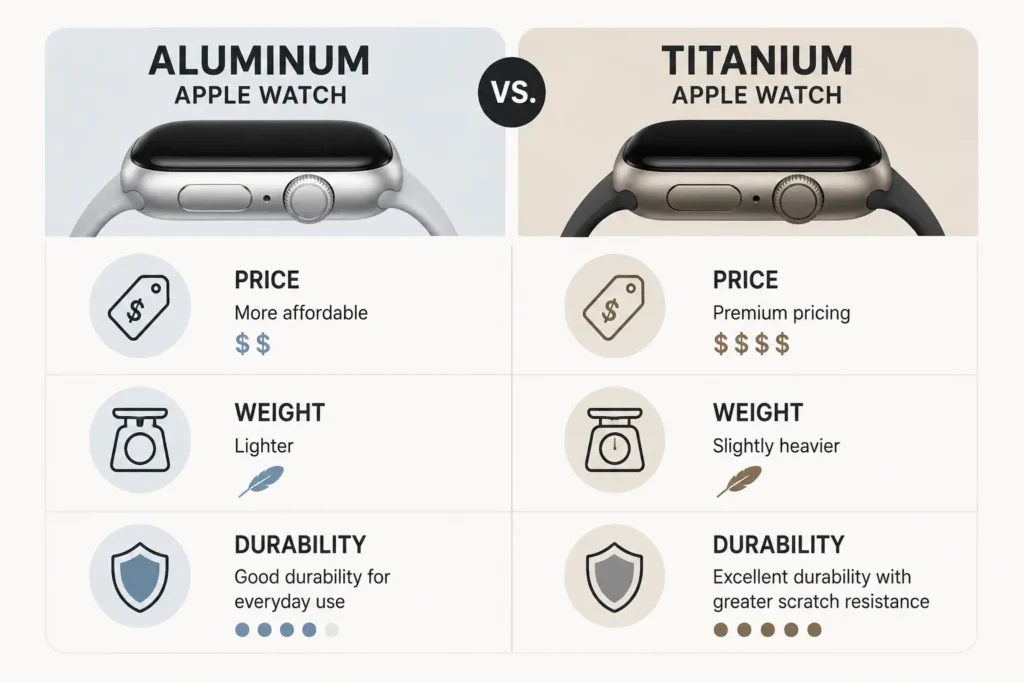
That $200 buys you the sapphire crystal display, the more durable case, and a noticeably more refined finish. Whether that is worth it depends on how long you plan to keep the watch and how much you value the upgraded materials. If you tend to replace your Apple Watch every generation or two, the aluminum model’s lower upfront cost is easier to justify. If you plan to wear the same watch for three, four, or more years, the titanium version’s durability can make it the better long-term value.
Style, Colors, and Finish
Aluminum and titanium Apple Watches also look and feel different on the wrist, beyond the size and weight difference.
Aluminum models come in a wider range of playful color finishes, giving you more options to match your personal style or coordinate with different band colors. The finish tends to be smoother and slightly glossier depending on the color chosen.
Titanium models lean into a more understated, upscale look, typically offered in natural, space black, and gold-toned finishes. The brushed or matte texture gives titanium a more refined, jewelry-like appearance that many buyers associate with the higher-end Apple Watch tiers, including some Ultra and past special-edition models.
If color variety and a fun, casual look matter to you, aluminum has the edge. If you want something that reads as more premium and pairs well with business or formal outfits, titanium is the better visual match.
Battery Life and Performance
Battery life and internal performance are not affected by case material. Aluminum and titanium versions of the same Apple Watch generation share identical chips, sensors, and software features. You are not sacrificing anything functional by choosing the lighter, cheaper aluminum option, and you are not gaining extra performance by paying more for titanium.
This is an important point for anyone assuming titanium is a “better” watch overall. It is not more powerful or longer-lasting on a single charge. The upgrade is purely about material durability, display glass, weight, and finish.
Who Should Choose Aluminum
Aluminum makes the most sense if:
- You want the lowest starting price for a new Apple Watch
- You care more about lightweight comfort than long-term scratch resistance
- You like having multiple color options
- You tend to upgrade your watch every year or two
- You use your watch heavily for sleep tracking and want the lightest possible feel overnight
Who Should Choose Titanium
Titanium is the better fit if:
- You plan to keep the same watch for several years
- You want a display that resists scratches without a screen protector
- You prefer a more refined, understated look over bright colors
- You are willing to pay roughly $200 more for better long-term durability
- You work in conditions where the watch is likely to take regular bumps and knocks

Final Verdict
There is no universally “better” choice between aluminum and titanium Apple Watch models, only a better choice for your specific habits and budget. Aluminum wins on price, weight, and color variety, making it the practical pick for most everyday users. Titanium wins on scratch resistance, dent resistance, and long-term appearance, making it the stronger choice for people who keep their devices for years or who put their watch through tougher daily conditions.
Think about how long you typically keep an Apple Watch before upgrading, how physically demanding your daily routine is, and whether $200 for a more durable, refined build is worth it to you. That answer will point you toward the right material a lot faster than specs alone.