
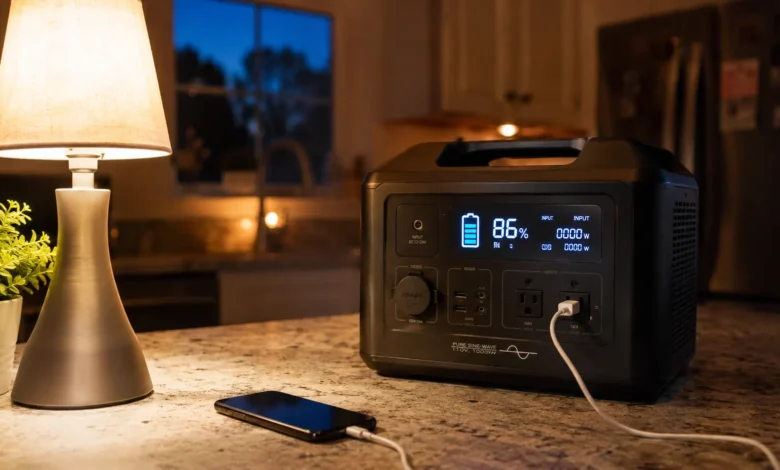
If you have shopped for a portable power station recently, you already know the category is crowded. Every brand claims to make the best portable power stations on the market, and the spec sheets rarely agree with each other. After years of testing these units for home backup, camping trips, and job sites, the real differences come down to five things: capacity, output, battery chemistry, recharge speed, and weight. Get those right for your situation and almost any well-reviewed unit will serve you well.
This guide walks through how to evaluate a portable power station like someone who actually uses one, not just someone reading a box.
What a Portable Power Station Actually Does
A portable power station is a large rechargeable battery packed into a case with an inverter, a battery management system, and multiple output ports. Unlike a car jump starter or a small USB power bank, it is built to run real appliances. Think refrigerators, CPAP machines, laptops, power tools, and space heaters, depending on the size you buy.
The battery inside stores direct current (DC) power. The built-in inverter converts that stored energy into alternating current (AC), the same type of power that comes out of a wall outlet. This is what separates a power station from a simple battery bank. You get standard AC outlets, USB-A and USB-C ports, and often a 12V DC car-style outlet, all from one box.
Capacity is measured in watt-hours (Wh). Output is measured in watts (W). These two numbers matter far more than brand name, and understanding them is the first step to picking the right unit.
How to Choose the Best Portable Power Station for Your Needs
1. Capacity and Watt-Hours
Watt-hour capacity tells you how much energy the unit can store. A 300Wh station can run a 60-watt device for about five hours before it needs recharging, though real-world runtime is always somewhat lower than the math suggests due to inverter losses.
For phone and laptop charging on a weekend camping trip, 200 to 500Wh is usually enough. For running a mini fridge or a CPAP machine overnight, look at 500 to 1000Wh. For whole-home backup covering a refrigerator, some lighting, and a WiFi router during an outage, most households need 1000 to 3000Wh, sometimes paired with expansion batteries. For trips where portability matters more than whole-home backup, portable power stations for camping are a better fit.
2. Output Power (Continuous vs Surge)
Every power station lists two wattage numbers: continuous output and surge (or peak) output. Continuous output is what the unit can sustain for extended periods. Surge output is a short burst, usually a few seconds, that covers the startup spike many motor-driven appliances need.
This distinction trips up a lot of first-time buyers. A refrigerator compressor might run at 150 watts continuously but spike to 800 watts or more at startup. If your power station’s surge rating cannot cover that spike, the unit will shut off or fail to start the appliance at all, even though the continuous wattage looked sufficient on paper.
3. Battery Chemistry: LiFePO4 vs NMC
Most higher-end portable power stations now use lithium iron phosphate (LiFePO4) cells instead of the nickel manganese cobalt (NMC) lithium-ion chemistry common in older models and cheaper units. LiFePO4 batteries are heavier and slightly bulkier per watt-hour, but they last far longer, typically rated for 2,000 to 4,000 charge cycles compared to 500 to 1,000 for NMC.
They are also more thermally stable, which matters if you plan to store the unit in a garage or vehicle where temperatures swing. If you are buying a power station as a long-term investment rather than a one-trip purchase, LiFePO4 is worth the extra weight.
4. Charging Speed and Recharge Options
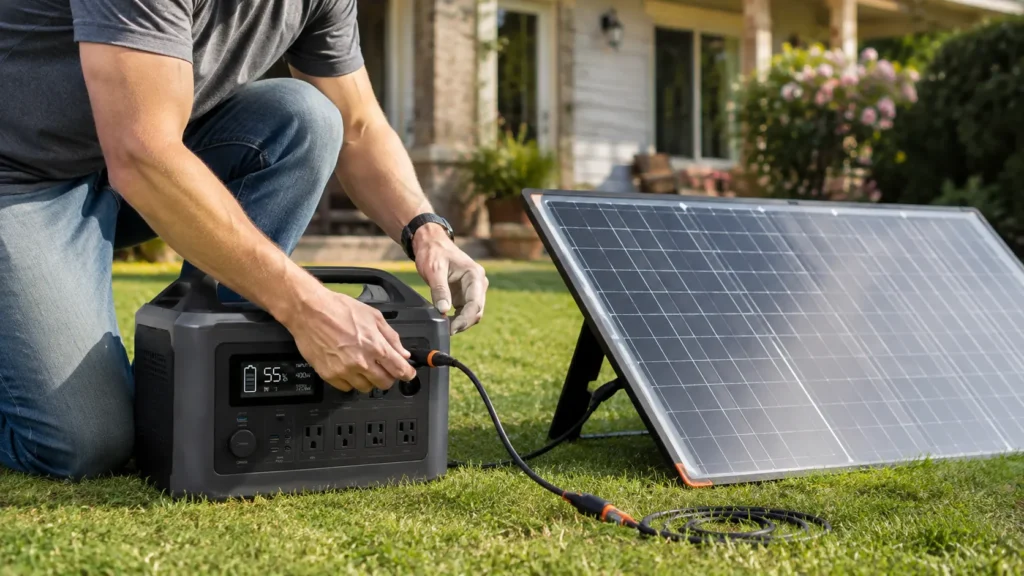
Look at how many ways a unit can recharge and how fast each method works. Wall outlet (AC) charging is the fastest for most units, often reaching a full charge in one to two hours on larger models with fast-charging support. Solar charging is far slower and depends heavily on panel wattage and sunlight conditions, so treat published solar recharge times as best-case estimates.
Car charging through a 12V outlet is the slowest common option and is best treated as a top-up method rather than a primary charging source. If you plan to rely on solar during extended outages or off-grid trips, buy the largest compatible solar input the unit supports, not the smallest panel bundled in a kit.
5. Weight and Portability
Capacity and weight scale together. A 1000Wh LiFePO4 unit typically weighs 20 to 30 pounds, while a 2000Wh-plus unit can weigh 45 pounds or more. That is manageable for a garage-to-car trip but awkward to carry up stairs or across a campsite repeatedly.
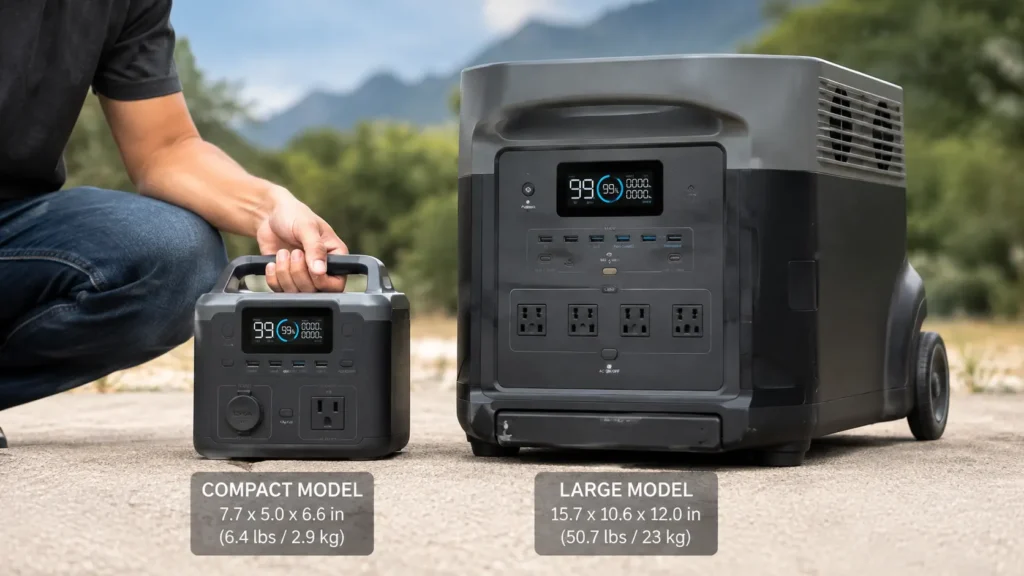
If portability matters more than raw capacity, either buy the smallest unit that meets your actual power needs or look for models with retractable handles and wheels, which several manufacturers now offer on their larger units.
Matching a Portable Power Station to Your Use Case
1. Home Backup During Power Outages
For outage prep, prioritize continuous and surge wattage over pure capacity. A station needs enough surge power to start a refrigerator compressor, and enough continuous wattage to keep it running alongside a few other essentials like lighting and a router. Many households pair a 1000 to 2000Wh unit with a portable solar panel so the battery can recharge during daylight hours if an outage runs longer than a day.
Keep the unit charged and stored at room temperature when not in use, and test it every few months rather than discovering a dead battery during an actual outage.
2. Camping and Overlanding
Weight and port variety matter more than raw capacity for most camping trips. A 300 to 600Wh unit with USB-C PD output for fast phone and laptop charging, plus a 12V port for a cooler, covers most weekend trips. If you are running a CPAP machine overnight while camping, size up to at least 500Wh to be safe.
3. RV and Van Life
RV and van life setups benefit from larger capacity, LiFePO4 chemistry for cycle longevity, and solar input compatibility, since these units often get charged and drained daily for weeks at a time. Look for models that support both AC shore power and solar charging simultaneously, since this is common when parked at a campsite with mixed hookup availability.
4. Worksite and Job Site Power
On job sites, continuous wattage is the priority since power tools draw steady current rather than the brief surge profile of a refrigerator. A 1000 to 1500W continuous rating covers most corded tools, and a rugged, drop-resistant case matters more here than it does for home use.
Safety Considerations for Portable Power Stations
Portable power stations are generally safe when used as directed, but a few practices reduce risk further. Keep units away from direct heat sources and avoid leaving them in a hot car during summer, since sustained high temperatures degrade battery cells faster than normal use.
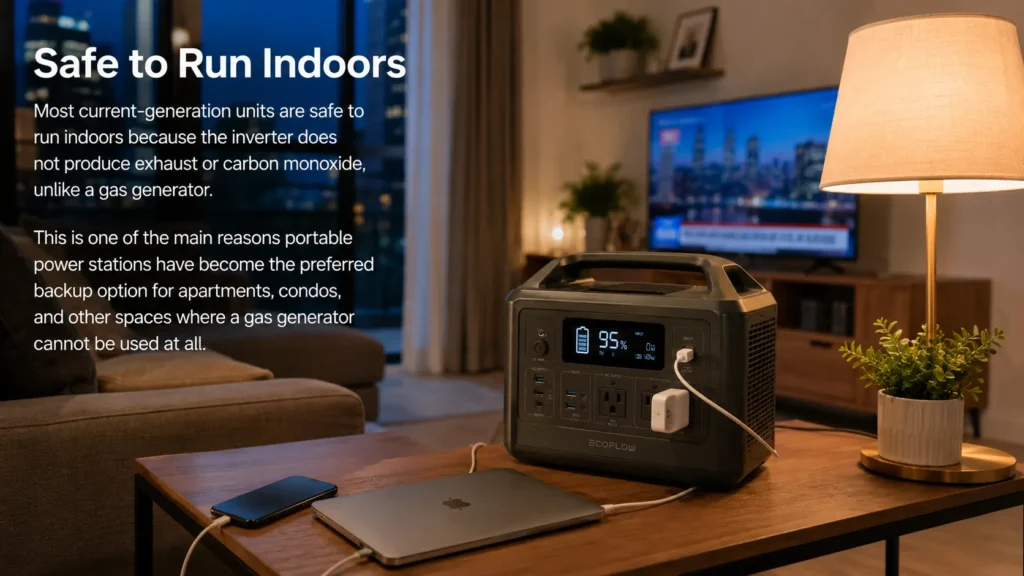
Most current-generation units are safe to run indoors because the inverter does not produce exhaust or carbon monoxide, unlike a gas generator. This is one of the main reasons portable power stations have become the preferred backup option for apartments, condos, and other spaces where a gas generator cannot be used at all.
Never plug a power station’s AC output directly into a home’s wall wiring or breaker panel unless it is installed through a properly rated transfer switch by a licensed electrician. Backfeeding power into household wiring without this safeguard creates a serious electrocution risk for utility workers repairing outside lines.
Maintenance and Battery Longevity
Store a portable power station at roughly 50 to 80 percent charge if it will sit unused for more than a few weeks, rather than leaving it fully charged or fully drained for long periods. Most LiFePO4 units also include a display showing cycle count, which is a more accurate indicator of remaining lifespan than calendar age.
Recharge the unit every one to three months even if it is not in active use, since lithium batteries slowly self-discharge and deep discharge over long periods can shorten their usable life.