

Automotive technology is the branch of engineering and applied science behind how vehicles move, connect, and protect the people inside them. It covers everything from engine mechanics and electric powertrains to driver assistance sensors and onboard diagnostics, spanning both the vehicles themselves and the people trained to build and service them.
The Core Definition Of Automotive Technology
At its simplest, automotive technology is the study and application of the systems that make self-propelled vehicles work. That includes cars, trucks, tractor-trailers, and even marine engines, since the same principles of combustion, electrical systems, and control software apply across most powered vehicles. A good example is the anti-lock braking system: it uses wheel speed sensors and a control unit to pump the brakes faster than a human foot could, and that single feature is a small case study in what automotive technology actually does. It takes an engineering idea and turns it into a system that keeps a driver safer on the road.
The field sits at the intersection of mechanical engineering, electronics, and increasingly, software. A car built in the 1990s ran on mostly mechanical and hydraulic parts. A car built today runs dozens of onboard computers, and that shift is the main reason automotive technology has grown from a repair trade into a much broader engineering discipline.
The Technology Systems Inside A Modern Vehicle
Most people think of “automotive technology” as one thing, but it is really a stack of separate systems working together. Here are the four that shape almost every modern vehicle.
Driver Assistance And Safety Sensors
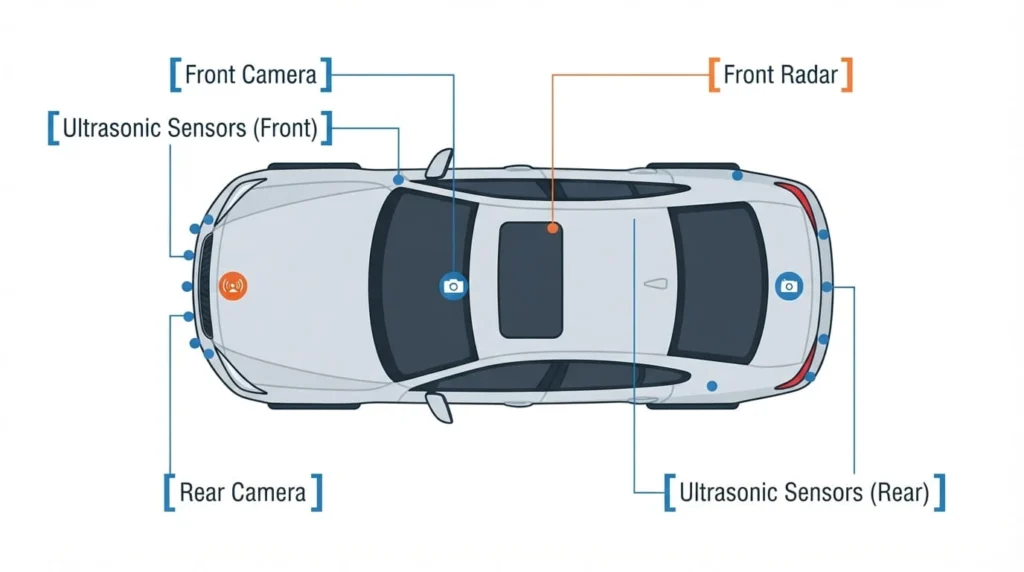
Advanced driver assistance systems, usually shortened to ADAS, use cameras, radar, and ultrasonic sensors to help a driver avoid a crash or stay in a lane. Automatic emergency braking is a common example: forward-facing sensors detect a vehicle or object ahead, and the system applies the brakes if the driver does not react in time. These systems are also the foundation that self-driving features are built on, since a car cannot make automated decisions without first sensing what is around it accurately.
Electric And Hybrid Powertrains
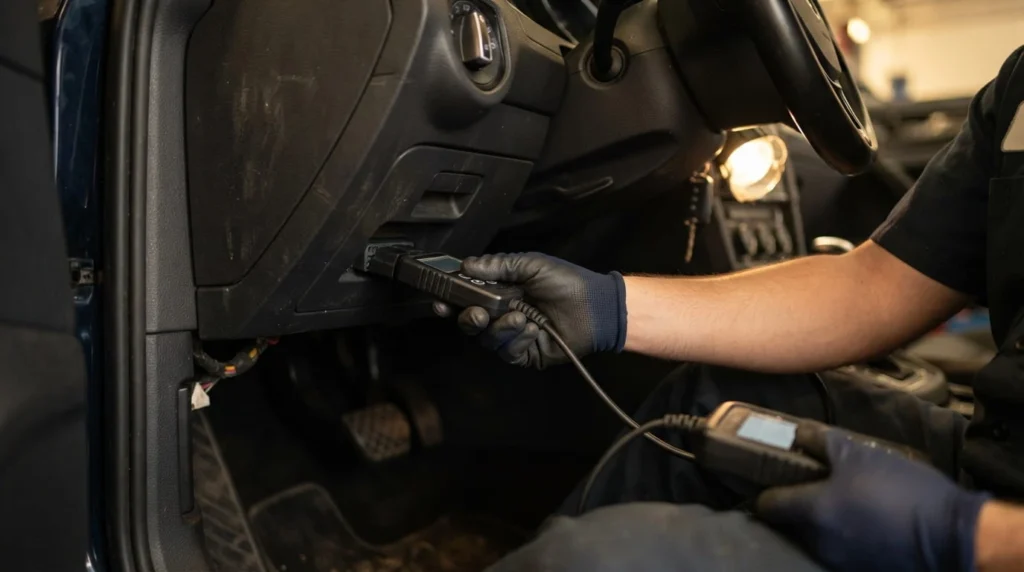
Electric vehicle technology replaces the combustion engine with a battery pack and one or more electric motors, while hybrid systems combine both. Regenerative braking is a good example of how this shift changes engineering priorities: instead of losing energy as heat when a driver brakes, the motor reverses its role and feeds energy back into the battery. Battery software has become its own specialty within the field. Hyundai Motor Company and Kia Corporation, for instance, made a strategic investment in Qnovo, a company that builds battery software for electric vehicles, which shows how much of the “engine” work in EVs now happens in code rather than metal.
Connected Car And Telematics Systems
Telematics lets a vehicle share data over a cellular or satellite connection, covering things like GPS tracking, remote diagnostics, and over-the-air software updates that fix bugs or add features without a trip to the shop. This connectivity also opens up vehicle cybersecurity as a real concern, since a car with a cellular connection is a car that can, in theory, be accessed remotely. Manufacturers now build in encrypted communication and intrusion detection the same way a laptop maker would, because a connected vehicle is really a computer network on wheels.
Onboard Diagnostics And Repair Tools
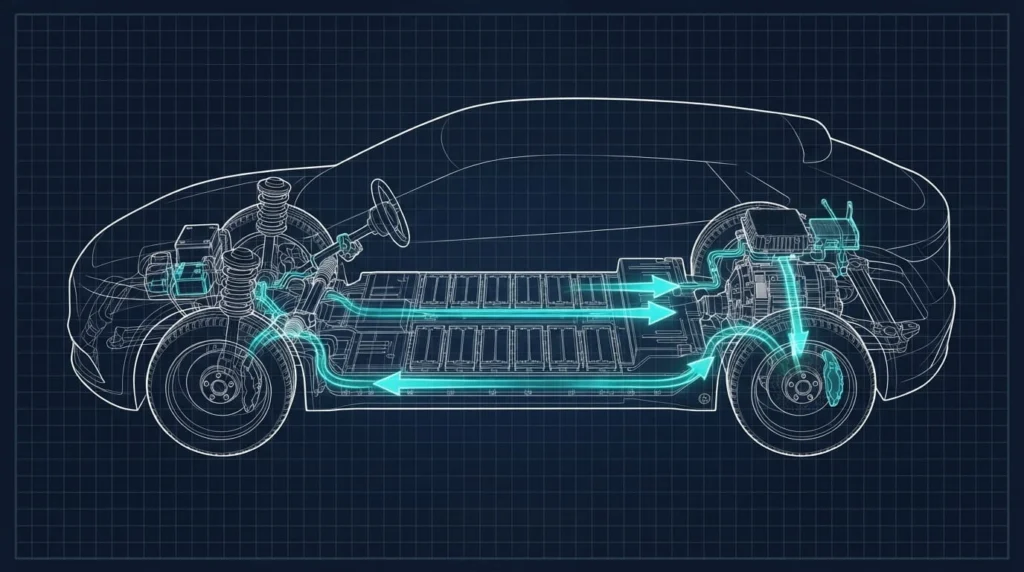
Every vehicle sold in the United States since 1996 has an OBD-II port, a standardized connector that lets a technician plug in a scan tool and read trouble codes straight from the vehicle’s computer. This is the technology side of automotive repair: instead of guessing at a problem, a technician can pull a specific code, such as one pointing to a misfiring cylinder, and go straight to the fix. It is also the clearest example of how automotive technology and automotive technician work overlap in daily practice.
Automotive Technology As A Field Of Study Vs A Career
It helps to separate two things that often get blended together: automotive technology as a field of engineering and study, and “automotive technician” as a specific job title within that field. Studying automotive technology can lead to hands-on repair work, but it can just as easily lead to a role in vehicle design, manufacturing, quality testing, or software development for connected car systems. A technician diagnoses and fixes vehicles that already exist. An automotive engineer or technologist often works upstream of that, building the systems technicians will later service. Both roles draw from the same base of knowledge, but they lead to different daily work and different pay ranges.
How To Get Into Automotive Technology
There are three common paths into the field, and the right one depends mostly on whether someone wants to start working sooner or aim for a design and leadership track later.
Associate Degree Programs
A typical associate degree in automotive technology takes about two years and roughly 60 credits, covering engine repair, electrical systems, suspension, and transmissions. This is the most common entry point for someone heading toward hands-on technician or service work.
Bachelor’s Degrees And Beyond
A bachelor’s degree adds up to about 120 credits and four years of study, building on the same fundamentals with more depth in areas like mechanical design and manufacturing management. Graduates from this track are more often aimed at engineering, research, or management roles rather than day-to-day repair work.
ASE Certification
Certification through the National Institute for Automotive Service Excellence, known as ASE, is the standard credential technicians use to prove their skills to employers. ASE has certified more than 300,000 professionals since 1972, and its exams typically include 40 to 75 scored, multiple-choice questions written by working technicians and industry specialists. Certificate programs that prepare someone for ASE testing usually run from six months to two years and can cost between $2,000 and $4,000 per year, well below the cost of a full degree.
Skills That Matter In Automotive Technology
Technical knowledge only goes so far without a few supporting skills. Critical thinking matters most day to day, since a customer’s description of a problem rarely matches the actual cause, and a technician has to work backward from symptoms to root cause. Problem-solving comes right after it, especially as vehicles mix mechanical, electrical, and software faults in the same repair. Communication rounds out the list, since explaining a repair estimate or a diagnostic finding to someone with no technical background is its own skill, separate from the diagnosis itself.
Where Automotive Technology Is Headed
The next stage of automotive technology is less about the engine and more about what surrounds the driver. Manufacturers are investing heavily in this shift. Toyota Motor North America, for example, announced a $3.6 billion investment to expand vehicle manufacturing capacity in the United States, a sign of how much capital is flowing into next-generation vehicle production. Expect that trend to keep pushing software, sensors, and battery systems further into the center of vehicle design, with mechanical hardware becoming the platform those systems run on rather than the main event.
Automotive Technology Career Outlook And Pay
According to the U.S. Bureau of Labor Statistics, the median annual wage for automotive service technicians and mechanics was $49,670 in May 2024, with the lowest 10 percent earning under $33,660 and the highest 10 percent earning over $80,850. The agency projects 4 percent employment growth from 2024 to 2034, close to the average for all occupations, with about 70,000 openings expected each year, mostly from workers retiring or moving to other roles. Pay in engineering and software-focused automotive roles tends to run higher than repair-side technician pay, though that gap depends heavily on the specific employer and location.
Automotive technology is not one job or one skill. It is the whole system of engineering, software, and hands-on repair work that keeps modern vehicles running and keeps them improving. Whether the goal is a technician role, an engineering path, or something in between, the entry points above are a reasonable place to start.
FAQ’S
1:What is automotive technology in simple terms?
Automotive technology is the study and application of the systems that make vehicles move, connect, and stay safe, including engines, electric powertrains, driver assistance sensors, and onboard computers.
2:Is automotive technology the same as being a mechanic?
Not exactly. A mechanic or automotive technician repairs vehicles that already exist, while automotive technology is the broader field that also includes designing, engineering, and building those systems in the first place. Technician work is one career path within the larger field.
3:How long does it take to learn automotive technology?
An ASE-focused certificate program can take six months to two years, an associate degree typically takes about two years, and a bachelor’s degree usually takes four years. The right length depends on whether the goal is entry-level repair work or an engineering-focused career.
4:What skills do you need for a career in automotive technology?
Critical thinking and diagnostic problem-solving matter most, since faults are rarely obvious from a customer’s description alone. Communication skills matter almost as much, since technicians and engineers both need to explain technical findings to people without a technical background.
5:Is automotive technology a good career path in 2026?
The U.S. Bureau of Labor Statistics projects steady, average-pace job growth for automotive service technicians through 2034, with about 70,000 openings a year. Demand is likely to keep shifting toward electric vehicle and software specialists as that side of the industry grows, so building skills in those areas can be a strong long-term move.