Cleaning hardwood floors requires a different approach than cleaning carpet. Heavy bristle brushes can scatter grit across polished planks. Too much water from hybrid mopping pads can warp delicate planks. High suction alone will not solve the problem if fine dust stays trapped in plank grooves.
Finding the best robot vacuum for hardwood floors means balancing gentle floor care with strong debris pickup. The right machine removes fine dust, handles pet hair, and navigates transitions without scratching your polyurethane coat or oil finish.
This guide details what makes a robot vacuum ideal for wood surfaces. It breaks down top configurations, key features, and maintenance habits to protect your flooring investment.
Why Hardwood Floors Need Special Robot Vacuum Considerations
Hardwood floors present unique cleaning challenges that carpeted homes do not face. Dirt on hard surfaces is not trapped in carpet fibers. It sits directly on top of the finish.
When a vacuum sweeps across wood, rigid bristles can push small pebbles or grit across the floor. This action creates micro-scratches that dull the finish over time. Standard vacuum wheels made of hard plastic can also leave scuff marks when turning sharply.
Airflow dynamics change on hard surfaces as well. High suction can scatter light debris like kitty litter or cereal if the side brushes spin too fast. A vacuum designed for hardwood must regulate brush speeds and maintain close contact with the floor.
Hybrid vacuum and mop models introduce another factor. Standing water is the primary enemy of natural wood, engineered planks, and laminate. A quality hard floor robot vacuum must control water flow precisely to prevent moisture from seeping into floor seams.
What to Look For in the Best Robot Vacuum for Hardwood Floors
Selecting the right vacuum requires evaluating specific hardware choices rather than relying on raw suction specs alone.
1:Brush Roll Design: Rubber Rollers vs Bristles
Traditional bristle brushes work well for agitating carpet fibers. However, they are prone to tangling pet hair and can scratch soft wood finishes.
Dual rubber rollers are much better for hardwood. Rubber treads hug the surface closely, creating a tight seal without harsh scraping. They flick dirt directly into the suction channel without flinging particles across the room. Rubber rolls also resist hair tangles, making them easier to clean.
2: Suction Power and Airflow Control
Suction power is measured in Pascals, often listed between 2,000 Pa and 10,000 Pa. While high numbers sound impressive, raw suction power is secondary to airflow design on hard floors.
A vacuum needs a flexible rubber squeegee skirt around the suction inlet. This skirt seals against the wood, directing air momentum into floor cracks where fine dust settles. Look for models with variable power settings. This allows the machine to lower suction on smooth planks to save battery, then increase power automatically on rugs.
3: Wheel Materials and Suspension
A robot vacuum rests its weight on two primary drive wheels and a front caster wheel. On hardwood, those wheels must be capped with soft, non-marring rubber.
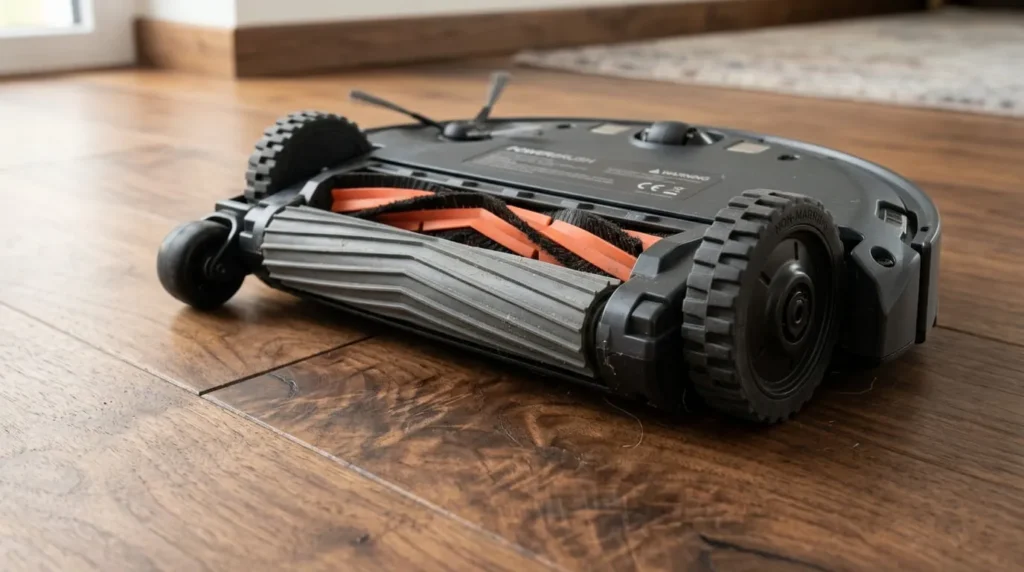
Quality suspension systems allow drive wheels to climb threshold transitions without dragging the belly of the machine across floorboards. The front caster wheel should turn smoothly without sticking. A stuck caster wheel acts like a plastic scraper, dragging trapped sand across your floor.
Mopping Attachments and Water Control Rules
Many modern robot vacuums include mopping functions. For hardwood, passive drip mops are unsafe because they release water unevenly.
Choose models with electronic water pumps or vibrating mop pads. Electronic pumps allow you to set water output to extra-low levels. This leaves only a thin mist that evaporates in seconds.
Advanced units feature automatic pad lifting. When the robot detects an area rug, it lifts the wet mop pad several millimeters above the floor. This prevents damp marks on wool or synthetic carpets.
Navigation Systems and Threshold Clearance
Hardwood homes often feature open floor plans, area rugs, and raised floor transitions between rooms. Accurate navigation prevents the robot from repeatedly bumping into baseboards or furniture legs.
LiDAR navigation uses lasers to create precise maps of your space. It works in complete darkness and plans logical, row-by-row cleaning paths.
VSLAM navigation uses cameras to identify landmarks. Camera systems excel at identifying small obstacles like cables or pet waste, though they require ambient light.
Ensure the vacuum offers at least 20 millimeters of threshold clearance. This lets it cross transition strips between hardwood and tile without getting stuck.
Top Picks for Hardwood Floor Robot Vacuums
Different homes have different cleaning priorities. Here is how specific vacuum designs match particular household needs.
1: Best Overall: Dual Rubber Roller with Precision LiDAR
The top overall design for hardwood combines dual counter-rotating rubber rollers with top-mounted LiDAR. Counter-rotating rollers pull in heavy debris while sweeping fine flour and dust into the airflow path.
LiDAR mapping ensures complete coverage without missing strips of floor. These units efficiently navigate around dining table chairs and delicate furniture legs. Their soft rubber bumpers protect baseboards from scuffs during perimeter edge cleaning.
2: Best for Pet Hair on Hardwood: High-Suction Anti-Tangle System
Pet hair on hardwood floors tends to drift into corners and under low furniture due to air currents. A robot vacuum for pet owners needs strong side brushes and high static suction.
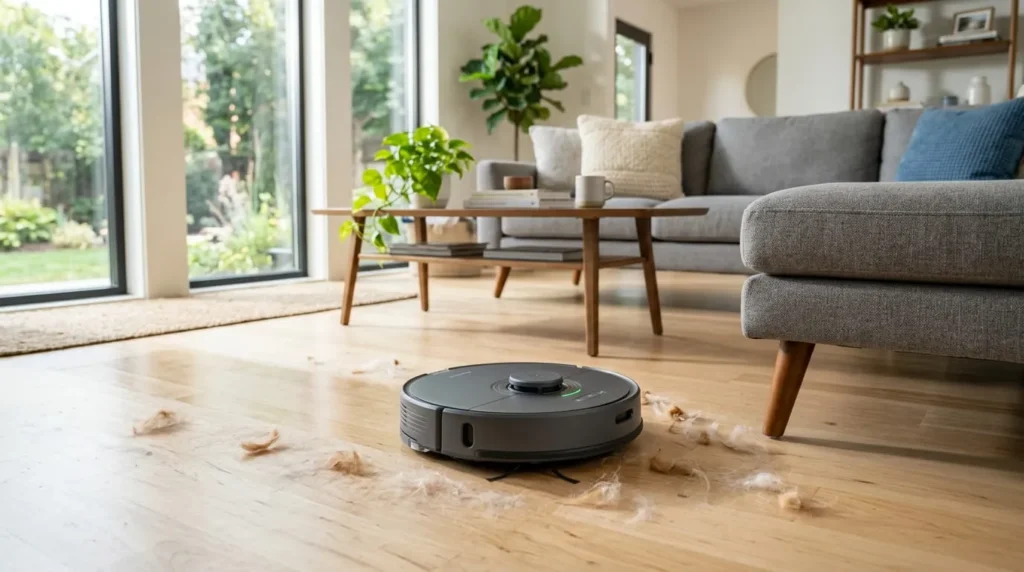
Look for side brushes that adjust their speed. High speed near walls sweeps hair out of corners, while lower speed in open spaces prevents hair from blowing away. Pure rubber rollers prevent dog and cat hair from wrapping tightly around the axle.
3: Best Vacuum and Mop Combo: Smart Water Control with Pad Lifting
If you want simultaneous vacuuming and damp wiping, select a combo unit with active pad scrubbing. These machines use ultrasonic vibration or rotating dual mops to lift dried muddy paw prints.
The critical safety feature for wood is auto-lifting technology. When the robot transitions from hardwood to an area rug, it raises its mop head automatically. It also shuts off the water pump completely when returning to its dock.
4: Best Budget Option: Slim Profile with Soft Rubber Wheels
Budget-friendly robot vacuums often rely on random bounce navigation or basic gyro mapping. While less efficient than LiDAR, slim budget models under three inches tall fit easily under low couches and beds where dust bunnies hide.
When buying a budget model for hardwood, verify that it uses soft rubber drive wheels and a removable bristle brush. Replacing a bristle brush with a rubber roller conversion kit helps protect your floor finish on a budget.
How Robot Vacuums Protect Different Wood Finishes
Not all hardwood floors react to cleaning equipment the same way. The age and type of floor finish dictate how carefully you should select your cleaning settings.
1: Solid Hardwood vs Engineered Wood
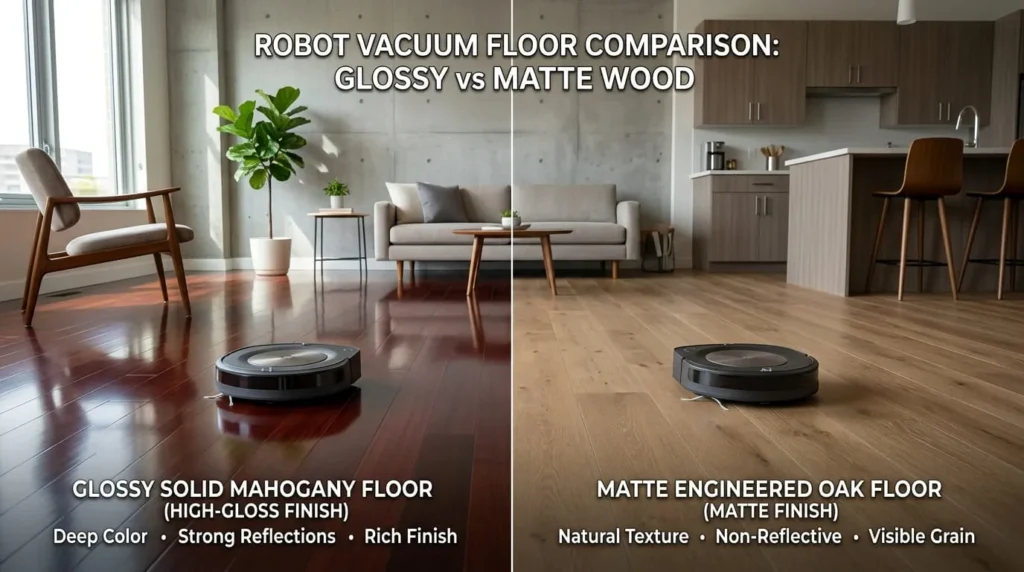
Solid hardwood can be refinished multiple times, but its surface seal still requires care. Polyurethane finishes, whether satin or high gloss, show fine scratch swirls under bright light if abrasive grit is dragged across them.
Engineered wood features a thin real-wood veneer over plywood core layers. Excess water is especially dangerous for engineered floors. If moisture penetrates the seams, the core layers can swell, causing edges to cup or delaminate. Use vacuum-only modes or minimal water settings on engineered planks.
2: Bamboo and Soft Wood Flooring
Bamboo and soft woods like pine or fir dent and scratch more easily than oak or maple. High-heel shoes, pet claws, and hard plastic vacuum wheels can leave indentations in soft pine.
For soft wood species, choose a lightweight robot vacuum. Check that the front swivel wheel turns freely without binding. Clean the caster wheel housing weekly to stop fine sand from grinding against soft floorboards.
3: Unsealed or Waxed Wood Hazards
Unsealed, oiled, or traditional waxed hardwood floors should never be cleaned with wet mopping robot attachments. Water breaks down wax coatings and leaves white water spots on unsealed timber.
For these classic floors, disable all mopping functions entirely. Use dry micro-fiber attachment pads or suction-only vacuuming modes to lift dust safely.
Common Hardwood Cleaning Mistakes to Avoid
Even a high-end robot vacuum can damage your floors if used incorrectly. Avoid these common operational mistakes.
Over-Wetting Wood Surfaces
Never fill a robot vacuum water tank with harsh chemical floor cleaners unless approved by the manufacturer. Chemicals can degrade internal seals, causing liquid to leak freely onto your floor when parked.
Always use plain distilled water or official floor cleaning solutions designed for robot mops. Set the water flow rate to the lowest effective setting. Your floor should dry completely within two minutes after the robot passes.
Ignoring Trapped Grit in Wheel Wells
Small pebbles, drywall dust, or tiny metal debris can become wedged in the rubber treads of the drive wheels. If a sharp piece of gravel embeds in the wheel, it acts like a glass cutter, scoring a line across your entire home.
Inspect drive wheels and caster wheels once a week. Wipe them down with a damp cloth and pick out any embedded debris before starting a cleaning cycle.
Using Harsh Cleaning Solutions in Mop Tanks
Vinegar, bleach, and ammonia break down protective polyurethane finishes over time. They strip away the shine and leave wood vulnerable to moisture damage. Stick to mild, pH-neutral cleaners diluted strictly according to manufacturer guidelines.
H2: Maintenance Tips for Peak Performance on Hardwood Floors
Regular maintenance keeps your robot vacuum cleaning efficiently while safeguarding your floors. Follow this simple routine to maintain peak performance.
First, check side brushes weekly. Curved or frayed bristles can push dirt under the machine unpredictably instead of channeling it into the suction path. Warm water can reshape bent nylon bristles, or you can replace them every three months.
Second, empty the dustbin before it fills completely. A packed dustbin reduces airflow, which forces the vacuum to rely more on mechanical brush sweeping rather than air suction. High airflow is necessary to lift fine grit out of deep floor joints.
Third, wipe down cliff sensors and optical sensors with a dry microfiber cloth. Dusty sensors cause erratic movement, leading the robot to bump hard against baseboards or slide off room transitions.
Finally, clean the charging dock contact points and the floor area around the dock. If grit accumulates near the base station, the robot will grind over that same spot every time it returns to charge. Keep the dock landing pad clean and clear.
By choosing a model with soft rubber components, gentle water control, and smart navigation, you can keep your hardwood floors spotless without risking scratches or moisture damage