The best budget office chairs in 2026 sit in the $150 to $400 range and still cover the basics that matter most: adjustable lumbar support, a seat depth you can change, and a base that won’t wobble after six months of daily use. You don’t need to spend $1,300 on a Steelcase to sit comfortably through an eight-hour workday. You do need to know which features are worth paying for at this price point and which ones are just marketing.
This roundup draws on hands-on testing from reviewers at Tom’s Guide, BTOD.com, and CNN Underscored, along with manufacturer specs and real owner feedback, rather than relying on a single source or a spec sheet skim.
What Counts as a Budget Office Chair in 2026
Under $150, most chairs cut corners on the parts that fail first: the gas lift cylinder, the tilt mechanism, and the mesh weave. Between $150 and $400, that changes. This is where brands like Colamy and Alera start including features that used to be exclusive to $600-plus chairs, such as adjustable lumbar depth, 4D armrests, and a tilt lock.
Above $400, you’re closer to entry-level Steelcase and Herman Miller territory, either new lower-tier models or refurbished flagship chairs. For most home offices and small businesses, the $150-$400 range delivers the best return on investment.
Price alone doesn’t tell you much without knowing where the money went. Two chairs can sit at $220 and feel completely different after a month, because one spent the budget on the gas cylinder and base while the other spent it on a padded headrest that nobody actually needed. When you’re comparing listings, check the warranty length first. A chair backed for one year is telling you something different than a chair backed for three, even if the cushions look identical in photos.
Remote work and hybrid schedules pushed more people into buying their own office seating instead of using whatever showed up in a corporate supply closet. That shift is part of why brands like Colamy have grown quickly in this space. Their chairs are built around the features remote workers actually ask about, such as seat depth and lumbar height, rather than the aesthetic extras that matter more in a showroom than at a desk.
What to Look for Before You Buy
1. Adjustability That Actually Gets Used
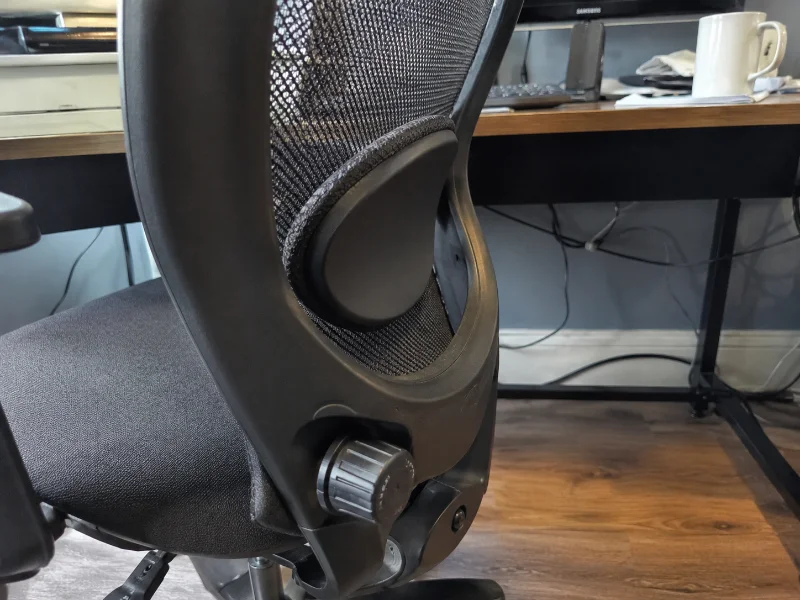
Seat height and armrest height are the minimum. Seat depth adjustment matters more than most buyers expect, since a seat pan that’s too long digs into the back of your knees within an hour. Lumbar support that moves up and down, not just in and out, is the feature that separates a genuinely comfortable budget chair from one that just looks adjustable on the spec sheet.
2. Materials and How Long They Last
Mesh backs breathe better than foam-padded backs and hold their shape longer. A steel or aluminum base will outlast an all-plastic one by years, particularly if the chair moves on hard flooring. According to testing published by Office Chair Judge, most sub-$300 chairs use lower-end components and hold up for two to four years of daily use before the foam compresses or the mesh sags, which is a reasonable lifespan to plan around rather than a flaw to avoid entirely.
Best Budget Office Chairs to Buy Right Now
1. Colamy Ergonomic Atlas, Best Under $300
The Atlas pairs high-density foam seating with a full adjustment package, including lumbar depth, armrests, and headrest, on a solid metal base. Office Chair Judge lists it as the top overall pick under $300 for 2026, citing the three-year warranty as a sign the brand expects the chair to actually last.
2. Colamy Kirin, Best Under $200
Drop below $200, and the Kirin is the chair reviewers keep pointing to. It has a mesh back, adjustable lumbar support, and a two-way headrest, and testers note the build quality holds up better than most chairs at this price. It’s a sensible pick for a spare room office or a first apartment desk setup.
3. Colamy Hina, Best for Small Frames
BTOD.com’s Amazon roundup calls out the Hina for its aluminum build, tilt limiter, seat depth adjustment, and four-way armrests at $224, features the reviewer notes usually don’t show up until the $500-plus range from bigger manufacturers. It runs slightly smaller than the Atlas or Kirin, which makes it a better fit for shorter users who find larger budget chairs feel oversized.
4. Alera Elusion Series Multifunction Chair
CNN Underscored named the Elusion its best budget pick after testing it against chairs retailing for five times the price, particularly on comfort and adjustability. It won’t match a premium chair’s materials, but for the price, the adjustment range is unusually generous.
5. Branch Ergonomic Chair
The Branch chair offers easy-to-adjust armrests, seat depth, and lumbar support, which puts it ahead of most chairs in its price bracket on paper. In CNN Underscored’s side-by-side testing, it came in behind the Alera Elusion and the Steelcase Series 1 specifically on long-session comfort, so it suits shorter workdays better than back-to-back eight-hour sessions.
6. Refurbished Steelcase Series
A refurbished Series 1 pushes past the strict budget bracket, but reviewers at CNN Underscored and BTOD.com both flag it as the best bang for the buck in the office chair market overall. It comes from a company that publishes its own materials on what makes a quality chair, includes a simple design that’s easy to assemble, and carries a ten-year warranty that budget brands can’t match.
Common Mistakes When Buying a Budget Office Chair
1. Skipping the Weight Capacity Line
Every chair lists a maximum weight capacity, and it’s easy to skip past on a product page. Chairs rated below their actual load tend to sag in the seat pan and lose tilt tension months earlier than the same chair used within its rated range. Check this number before checking the color options.
2. Ignoring Seat Depth for Your Height
A chair that’s comfortable for a 5’10” reviewer can feel completely wrong for someone shorter or taller. Seat depth adjustment exists specifically to fix this, so if a budget chair doesn’t offer it, measure your own thigh length against the fixed seat pan dimensions listed on the product page before buying.
3. Buying Based on the Headrest Instead of the Base
Headrests get attention in marketing photos because they’re visually obvious, but the base and casters take the daily wear. A steel five-star base with quality casters will outlast a flashy headrest on a plastic frame by a wide margin, particularly on hard flooring.
Budget Office Chairs vs Premium Chairs, What You Actually Give Up
The gap isn’t comfort on day one. Most budget chairs feel fine in a showroom or a first week of use. The gap shows up in foam density over time, in how well the mechanisms hold their adjustment after months of use, and in warranty length. A $250 chair with a three-year warranty and a $1,300 chair with a twelve-year warranty are making very different promises about how long the materials are expected to perform.
If you sit for four to five hours a day, a well-chosen budget chair covers your needs. If you’re at a desk for eight-plus hours daily, the adjustable lumbar depth and seat pan quality on chairs like the Atlas or the Alera Elusion become the difference between a comfortable week and a sore lower back by Friday.
Weight matters here too. Reviewers at BTOD.com note that budget chairs generally run two to four years before foam compression or mesh sagging sets in, while a well-maintained premium chair can stay usable for a decade or more. That gap in expected lifespan is really what the extra few hundred dollars is paying for, not a dramatically different sitting experience on day one.
For most buyers, replacing a chair every few years isn’t a real problem. Home office setups change, work habits shift, and a $250 chair replaced twice over ten years still costs less than one premium chair bought up front. The math only tips toward premium seating once you know you’ll be sitting eight or more hours a day for years without a break in that routine.
How These Picks Were Compared
This list draws on published testing from Tom’s Guide writer Anthony Spadafora, who has worked from home for eight years and reviewed more than a dozen office chairs, alongside BTOD.com founder Greg Knighton, who has tested over 200 office chairs since 2018, and CNN Underscored’s comparative office chair testing. Specs were cross-checked against manufacturer listings rather than taken from a single review.
Budget chairs get replaced more often than premium ones, so treat the two- to four-year lifespan estimate above as a planning number, not a guarantee. Check current warranty terms directly with the retailer before buying, since coverage details change between model years.